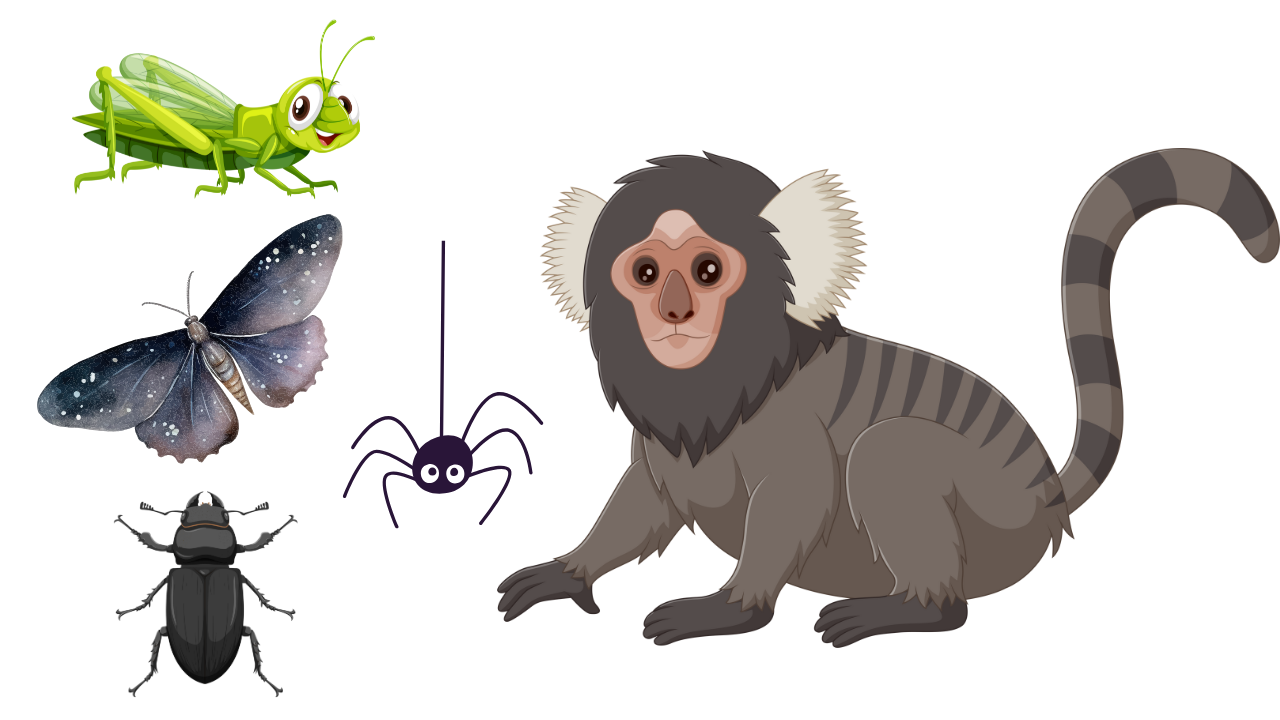
Imagine holding a monkey so small it could sit comfortably on your finger yet smart enough to survive in the dense Amazon rainforest. That tiny creature is the pygmy marmoset, the smallest monkey in the world.
But while their size may be adorable, their diet is surprisingly complex and completely different from most other primates.
So, what do pygmy marmosets eat? Do they survive on fruit like other monkeys? Can they eat human food? And what happens if their diet is wrong?
In this fully updated 2026 guide, you’ll learn everything about the pygmy marmoset diet from what they eat in the wild to how they should be fed in captivity, including safe foods, toxic items, feeding schedules, supplements, and expert-backed care tips.
What Do Pygmy Marmosets Eat in the Wild?
Pygmy marmosets (Callithrix pygmaea) live in the Amazon Basin, mainly in Brazil, Peru, Ecuador, and Colombia. Their environment is rich in trees, insects, and plant life and their diet evolved perfectly to match it.
Unlike most monkeys that rely heavily on fruit, pygmy marmosets have a highly specialized feeding strategy.
Tree Sap and Gum: Their Main Food Source
The most important part of a pygmy marmoset’s diet is tree sap and gum.
They are known as exudativores, meaning animals that feed on plant exudates like sap, resin, and gum.
How they eat sap:
- They use sharp, chisel-like lower teeth to bite holes in tree bark
- These holes are called sap wells
- Sap slowly flows out, and the marmoset returns multiple times a day to feed
A single pygmy marmoset can maintain over 100 sap wells across different trees.
Common trees they feed from:
- Acacia
- Ficus (fig trees)
- Ceiba
- Tamarind
Why sap is so important:
- Rich in natural sugars
- Provides steady energy
- Contains essential minerals
- Easy to digest for their small stomachs
Without sap, pygmy marmosets cannot survive long-term.
Insects Pygmy Marmosets Eat for Protein
While sap provides energy, pygmy marmosets still need protein and fats and they get these from insects.
Common insects in their diet:
- Crickets
- Grasshoppers
- Beetles
- Moths
- Butterflies
- Small spiders
Why insects matter:
- Support muscle development
- Help with hair and skin health
- Aid growth in young marmosets
- Keep them active and alert
In the wild, insects are hunted throughout the day, often hidden under leaves or bark.
Fruits and Nectar in a Pygmy Marmoset’s Diet
Although sap dominates their diet, pygmy marmosets also eat small amounts of fruit and nectar.
Typical fruits and plant foods:
- Figs
- Berries
- Papaya
- Mango
- Banana
- Flower nectar
- Young leaves and buds
Fruits provide:
- Vitamins (especially vitamin C)
- Antioxidants
- Hydration
⚠️ Important: Fruit is supplemental, not a main food.
What Do Pygmy Marmosets Eat in Captivity? (2026 Guide)
Feeding pygmy marmosets in captivity is challenging. Their health depends on how closely their diet mimics the wild.
Poor diets are one of the top causes of illness and early death in captive marmosets.
Tree Sap Alternatives for Captive Pygmy Marmosets
Since natural tree sap is hard to provide, caretakers use substitutes.
Best sap substitutes (2026):
- Acacia gum powder
- Gum arabic (food-grade)
- Commercial marmoset jelly
- Specialized primate gum diets
Feeding tips:
- Mix gum powder with warm water
- Spread it on branches, wooden toys, or bark
- Rotate feeding locations to encourage foraging
Avoid using honey as a staple it’s too sugary and should only be an occasional treat.
Best Insects to Feed Pygmy Marmosets
Live insects are essential in captivity.
Recommended insects:
- Gut-loaded crickets
- Mealworms
- Silkworms
- Dubia roaches
- Waxworms (occasionally)
Feeding guidelines:
- 3–4 small insects per day
- Always pesticide-free
- Dust with calcium + vitamin D3 weekly
Live insects also provide mental stimulation, reducing stress and boredom.
Safe Fruits and Vegetables for Pygmy Marmosets
Fruits should be fresh, soft, and served in small pieces.
Safe fruits:
- Papaya
- Apple (no seeds)
- Banana
- Mango
- Melon
- Blueberries
Safe vegetables:
- Grated carrot
- Cooked sweet potato
- Pumpkin
- Zucchini
Remove uneaten food within 1–2 hours to prevent bacteria.
Water and Supplements Pygmy Marmosets Need
Even though they get moisture from food, fresh water must always be available.
Best practices:
- Filtered water
- Shallow bowls
- Change twice daily
Essential supplements:
- Calcium (prevents bone disease)
- Vitamin D3 (especially indoors)
- Primate multivitamins
Lack of supplements can cause metabolic bone disease, one of the most common captive health issues.
How Often Do Pygmy Marmosets Eat?
Pygmy marmosets have an extremely fast metabolism.
Recommended feeding schedule:
- 4–5 small meals per day
- Small portions (teaspoon-sized)
- Consistent timing
Sample daily routine:
- Morning: Gum + fruit
- Midday: Insects
- Afternoon: Gum + vegetables
- Evening: Gum + fruit
- Optional night snack: insect
Foods Pygmy Marmosets Should Never Eat
Some foods are dangerous or toxic.
Never feed:
- Chocolate
- Caffeine
- Avocado
- Onions or garlic
- Citrus fruits
- Processed sugar
- Salty or fried foods
- Dairy products
These can cause:
- Digestive failure
- Liver damage
- Kidney problems
- Nutritional imbalances
Always consult an exotic animal veterinarian before changing diet.
Feeding Behavior of Pygmy Marmosets
Feeding is not just about nutrition it’s about behavior.
Natural foraging:
- Wild marmosets spend up to 70% of their day searching for food
- Captive environments should mimic this
Enrichment ideas:
- Gum hidden on branches
- Insects inside puzzle feeders
- Hanging feeding platforms
Benefits:
- Reduces stress
- Prevents aggression
- Improves mental health
Can You Keep a Pygmy Marmoset as a Pet? (2026 Note)
In many countries, owning a pygmy marmoset is illegal or highly regulated.
Even where legal:
- They require specialized care
- Long-term commitment
- Social companionship
- Ethical consideration
This article is for education and welfare awareness, not encouragement of illegal ownership.
Interesting Facts About the Pygmy Marmoset Diet
- They create personal “sap farms”
- They can detect sweeter sap by smell
- Their tongues are adapted for sticky food
- Insects are sometimes hunted for play
- Diet strongly affects lifespan and behavior
Frequently Asked Questions About Pygmy Marmosets’ Diet
What do pygmy marmosets eat the most?
Tree sap and gum make up the majority of their diet.
Are pygmy marmosets omnivores?
Yes, they eat sap, insects, fruits, and plant material.
Can pygmy marmosets eat human food?
No. Most human food is unsafe or unhealthy for them.
Do pygmy marmosets need supplements?
Yes, especially calcium and vitamin D3 in captivity.
How long can pygmy marmosets live with proper diet?
Up to 12–16 years in captivity with correct nutrition and care.
Final Thoughts: Feeding Pygmy Marmosets the Right Way
The pygmy marmoset’s diet is a perfect example of nature’s precision. Every bite of sap, every insect hunted, and every piece of fruit plays a role in keeping these tiny primates alive and thriving.
Whether in the wild or captivity, diet determines health, behavior, and lifespan.
The golden rule is simple:
Feed pygmy marmosets as nature intended with balance, variety, and respect for their wild instincts.
Understanding what pygmy marmosets eat doesn’t just make you informed it makes you appreciate how incredibly specialized and intelligent these small creatures truly are.