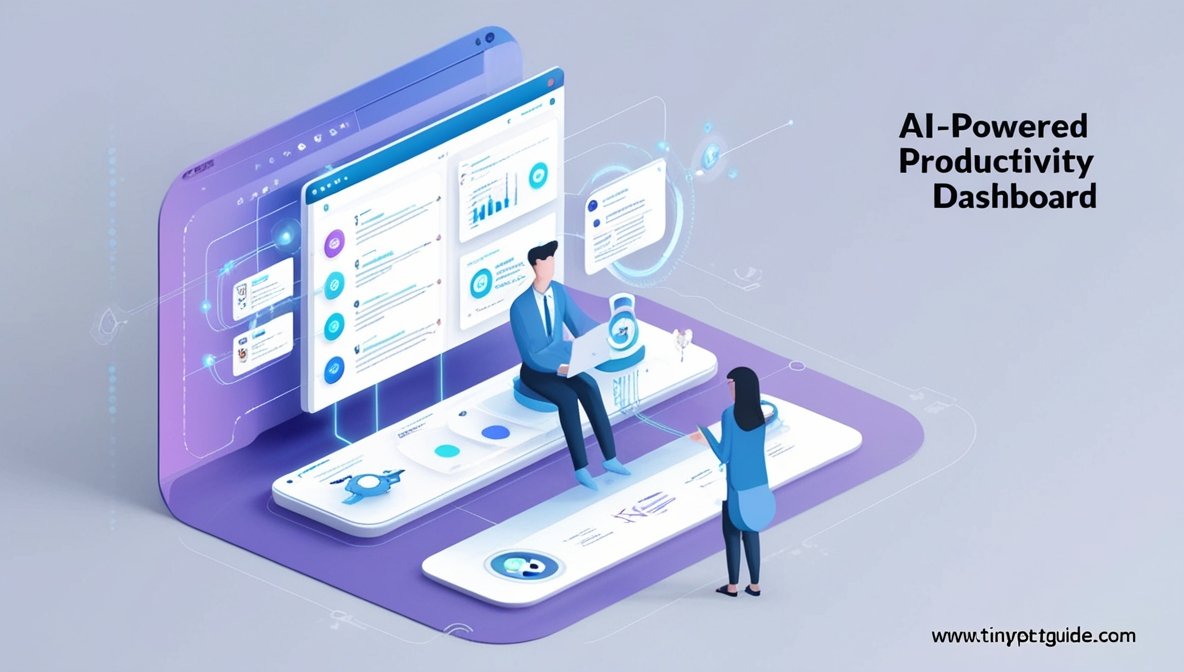
Most productivity software promises efficiency, yet leaves users overwhelmed, distracted, and buried in endless task lists.
Calendars fill up. To-do lists grow longer. Notifications never stop.
The real problem? Traditional productivity tools organise work but fail to understand how humans actually think, decide, and perform.
This is where OXZEP7 changes the game.
OXZEP7 is not another task manager. It is a cognitive productivity system—a next-generation software concept designed to think with the user, adapt to behaviour, and actively guide better work decisions.
By combining artificial intelligence, behavioural intelligence, and workflow automation, OXZEP7 represents a shift from reactive productivity to intelligent execution.
In this guide, you’ll learn exactly how to develop OXZEP7 software, from concept and architecture to technology stack, roadmap, monetisation, and long-term scalability.
What Is OXZEP7 Software? (Concept Explained)
At its core, OXZEP7 is an AI-driven operating system for work.
Instead of acting as a static task list, it continuously evaluates:
- Context
- Urgency
- User behaviour
- Energy levels
- Work patterns
- Team dynamics
The platform doesn’t ask users to constantly organise work. It organises itself—based on how work actually happens.
Conceptually, OXZEP7:
- Learns how users plan, act, delay, and complete tasks
- Recalculates priorities automatically
- Reduces decision fatigue by suggesting what matters now
- Automates repetitive coordination work
- Provides feedback loops that improve productivity over time
The result is a living productivity system that evolves with its users.
The 5 Core Pillars of OXZEP7 Development
Building OXZEP7 requires more than UI polish or feature stacking. It demands a system-level design philosophy. These five pillars form the foundation.
1. Intelligent Task and Priority Engine
This is the heart of OXZEP7.
Unlike traditional tools that rely on manual sorting, OXZEP7 uses AI-driven prioritisation logic that adapts in real time.
Key Capabilities:
- Dynamic prioritisation based on:
- Deadlines
- Estimated effort
- Dependencies
- User focus history
- Context-aware suggestions like:
- “Do this next”
- “Defer until tomorrow”
- Goal-based task grouping instead of static lists
- Automatic conflict resolution when schedules overlap
Behavioural Learning Inputs:
The system improves by tracking:
- Task completion patterns
- Postponement frequency
- Peak focus hours
- Time spent per task category
Over time, OXZEP7 becomes personalised productivity intelligence, not just storage for tasks.
2. Workflow Automation Layer
Manual coordination is one of the biggest productivity killers.
OXZEP7 eliminates this with a native automation engine—no third-party tools required.
Automation Logic Model:
- Trigger → Condition → Action
Real-World Automation Examples:
- Escalate urgent tasks delayed over 48 hours
- Move tasks to “Review” after document updates
- Reassign tasks when a user is marked unavailable
- Notify stakeholders when deadlines are at risk
Cross-Platform Power:
OXZEP7 connects workflows across:
- Calendars
- CRMs
- Document platforms
- Communication tools
This turns fragmented work into seamless execution flows.
3. AI Productivity Assistant
The AI assistant is not optional—it is central to OXZEP7’s intelligence layer.
Unlike passive chatbots, this assistant is proactive.
Core Assistant Functions:
- Daily intelligent briefings
- Focus-based task recommendations
- Natural language commands:
- “Plan my next 3 hours”
- “Summarise today’s meetings”
- Automatic meeting summaries with action items
- Real-time decision support
How It’s Different from Traditional Reminders
| Feature | Traditional Apps | OXZEP7 Assistant |
|---|---|---|
| Task Reminders | Time-based | Priority + energy-based |
| Planning | Manual | AI-generated |
| Meeting Notes | Manual | Automatic summaries |
| Interaction | Notifications | Conversational AI |
The assistant becomes a thinking partner, not a nagging alarm.
4. Collaboration and Team Intelligence
OXZEP7 treats collaboration as first-class intelligence, not a bolt-on feature.
Smart Team Workspaces Enable:
- Shared task environments with role-based access
- Real-time workload imbalance detection
- Automated task handovers
- AI-driven risk alerts for delays and bottlenecks
Instead of managers chasing updates, the system surfaces problems automatically.
Collaboration becomes proactive, transparent, and self-correcting.
5. Analytics and Performance Insights (Without Surveillance)
OXZEP7 focuses on empowerment, not monitoring.
Analytics are designed to help users work smarter, not feel watched.
Insight Categories:
- Focus time vs reactive time
- Burnout risk indicators
- Task-to-outcome mapping
- Delay and friction analysis
Sample Metrics:
| Metric | Insight |
|---|---|
| Focus Time Ratio | % of uninterrupted deep work |
| Completion Velocity | Tasks finished per day |
| Energy Peaks | Highest productivity hours |
| Delay Frequency | Tasks postponed multiple times |
These insights create self-awareness loops that drive continuous improvement.
Ideal Technology Stack for OXZEP7 Software
OXZEP7 requires a modern, scalable, AI-ready architecture.
Frontend & Mobile
- React.js or Next.js (web)
- Tailwind CSS or Material UI
- React Native or Flutter (mobile)
These ensure fast performance, design consistency, and cross-platform efficiency.
Backend & APIs
- Node.js or Python (FastAPI)
- GraphQL or REST APIs
- PostgreSQL for structured data
- Redis for real-time processing
This setup supports scalability, automation triggers, and low-latency interactions.
AI & Automation Infrastructure
- LLM APIs (for summaries and planning)
- Vector databases (Pinecone, Weaviate)
- Rule-based automation engines
- Hybrid logic + ML reasoning models
This hybrid approach balances predictability and adaptability.
Cloud, Scaling & Deployment
- Docker for containerisation
- Kubernetes for orchestration
- AWS or Google Cloud Platform
- Event-driven backend architecture
This ensures enterprise-grade reliability and global scalability.
Step-by-Step Roadmap to Build OXZEP7
Phase 1: MVP (8–12 Weeks)
Goal: Prove AI-driven productivity value.
Deliverables:
- Intelligent task prioritisation
- AI daily planner assistant
- Basic personal analytics dashboard
Phase 2: Automation & Collaboration
Goal: Eliminate manual coordination.
Deliverables:
- Workflow automation builder
- Team workspaces
- Calendar, email, and Slack integrations
Phase 3: Intelligence & Enterprise Scale
Goal: Predictive, enterprise-ready platform.
Deliverables:
- Behaviour-based predictive insights
- Advanced AI assistant
- Security, SSO, compliance
- Public API ecosystem
Monetisation Strategy for OXZEP7
OXZEP7 fits both individuals and enterprises.
Ideal Pricing Model:
| Plan | Features | Users |
|---|---|---|
| Free | Core tasks, basic planner | Individuals |
| Pro | AI assistant, automation, analytics | Freelancers |
| Team | Collaboration, shared workspaces | SMEs |
| Enterprise | Custom AI, compliance, SLA | Corporations |
Usage-based upgrades encourage natural growth.
Conclusion: OXZEP7 Is the Future of Intelligent Work
Productivity is no longer about doing more it’s about deciding better.
OXZEP7 represents a fundamental evolution:
- From task tracking → decision support
- From reminders → reasoning
- From manual coordination → intelligent automation
By blending AI, behavioural insight, and adaptive workflows, OXZEP7 creates a system that thinks, learns, and improves alongside its users.
For organisations building next-generation productivity platforms, developing OXZEP7 is not just an opportunity it’s a competitive necessity.
FAQs About Developing OXZEP7 Software
What makes OXZEP7 different from existing productivity tools?
OXZEP7 is proactive. It uses AI and behavioural intelligence to guide decisions rather than just storing tasks.
How long does it take to build an OXZEP7 MVP?
A functional MVP can be built in 8–12 weeks with a focused feature set.
Can OXZEP7 scale from individuals to enterprises?
Yes. Its modular architecture supports solo users, teams, and large organisations.
Is OXZEP7 cloud-based?
Yes. It is designed as a cloud-native, cross-device platform.
What type of AI does OXZEP7 use?
A hybrid model combining LLMs, rule engines, and behavioural learning algorithms.
Is OXZEP7 secure for enterprise use?
With encryption, role-based access, audit logs, and compliance layers, it meets enterprise security standards.
Can OXZEP7 integrate with third-party tools?
Yes. APIs and automation layers allow seamless integration with emails, calendars, CRMs, and more.
