

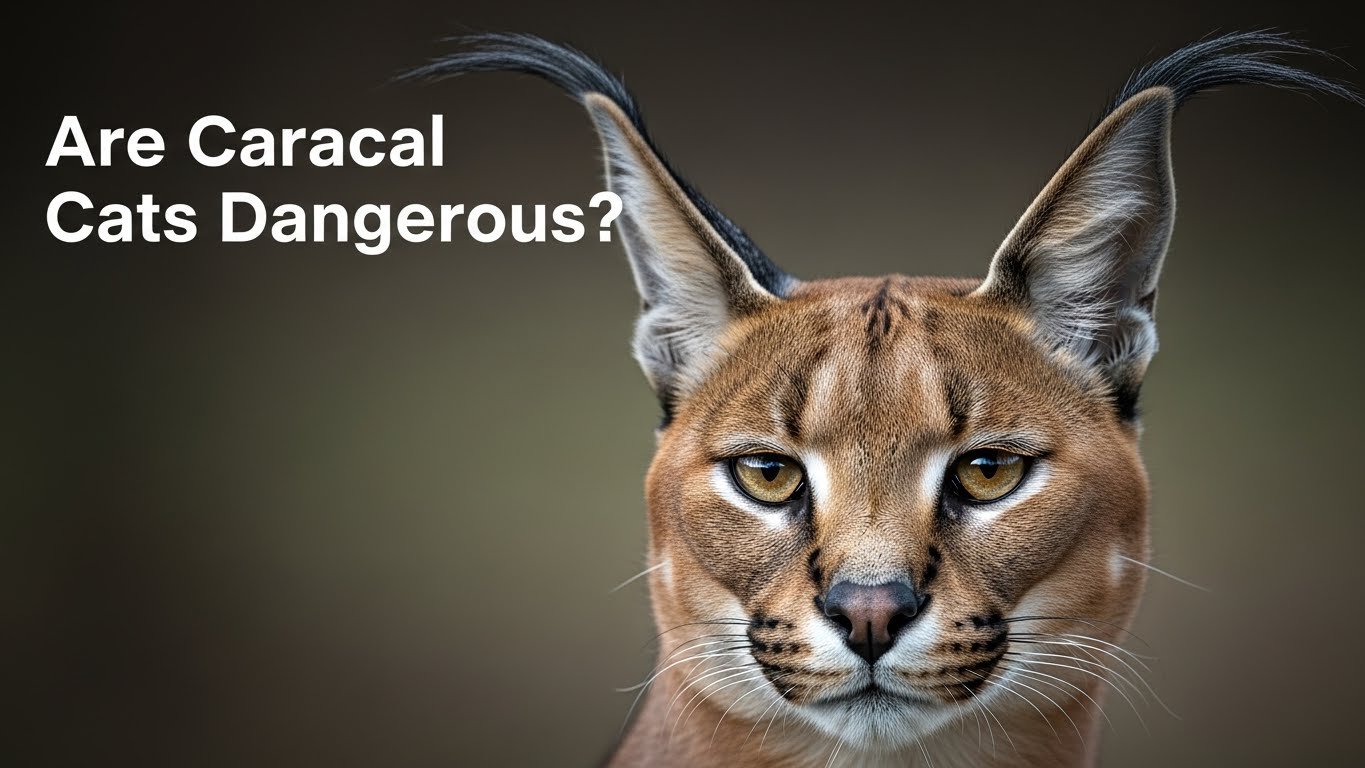
Caracal cats have become one of the most talked-about exotic animals on the internet. Their sharp facial features, powerful bodies, and dramatic black ear tufts make them look both majestic and mysterious. Viral videos often show caracals calmly walking on leashes, cuddling with owners, or playing like oversized house cats. These clips have led many people to ask a critical question: are caracal cats dangerous to humans and children, or is the risk exaggerated?
The answer is not simple, and it is not what social media suggests.
Caracals are wild predators, not domesticated pets. While some individuals raised in captivity may appear calm or affectionate, their instincts, strength, and behavioral patterns remain fundamentally wild. Understanding the real risks, limitations, and responsibilities involved is essential before anyone considers living with or interacting closely with a caracal.
This 2026 updated guide explains the full reality from natural behavior and physical danger to child safety, legal issues, and ethical responsibility without exaggeration or misinformation.
Understanding What a Caracal Really Is
A caracal (Caracal caracal) is a medium-sized wild cat native to Africa, the Middle East, Central Asia, and parts of India. Despite sometimes being compared to domestic cats, caracals are closer in behavior and capability to small wild predators like lynxes.
They evolved to survive independently in harsh environments, relying on speed, strength, and instinct rather than cooperation or tolerance.
Why Caracals Are Not Domesticated
Domestication takes thousands of years and selective breeding across generations. Caracals have never undergone domestication.
This means:
- Their instincts remain intact
- Their behavior is not predictable like a house cat
- They do not naturally adapt to human households
- Training does not remove wild responses
Even a caracal raised from a kitten does not become “tame” in the true sense it becomes habituated, which is very different.
Natural Caracal Behavior in the Wild
To understand whether caracals are dangerous, it is essential to understand how they behave naturally.
Solitary and Territorial Hunters
Caracals live alone in the wild. They do not form social groups or packs.
Key traits:
- Highly territorial
- Defensive of personal space
- Avoid confrontation when possible
- React explosively when threatened
They are not wired for tolerance of unpredictable behavior — something common in human environments.
Extreme Athletic Ability
Caracals are among the most athletic cats in the world.
They can:
- Jump over 10 feet vertically
- Change direction instantly mid-air
- Sprint with explosive speed
- Kill prey much larger than expected
This physical power is a major factor in their potential danger.
Why Caracals Look Calm But Aren’t Safe
One of the biggest misunderstandings about caracals is mistaking stillness for friendliness.
Calm Does Not Mean Comfortable
Caracals often remain still when stressed. This is a survival behavior, not relaxation.
Signs of internal stress include:
- Frozen posture
- Minimal movement
- Intense staring
- Silent withdrawal
Many attacks or defensive reactions occur after long periods of apparent calm.
Are Caracal Cats Dangerous to Adult Humans?
Caracals are not naturally aggressive toward humans, but they are capable of causing severe harm under the right conditions.
Physical Capabilities That Make Them Dangerous
Even though caracals weigh only 25–40 pounds, their muscle density and reflexes make them extremely powerful.
Risk factors include:
- Long, sharp canine teeth
- Retractable claws designed to kill
- Strong jaw and neck muscles
- Lightning-fast reaction time
A single defensive swipe can result in deep lacerations or permanent injury.
How Caracals React to Humans
Caracals may tolerate or bond with one or two familiar handlers, but this tolerance is conditional.
Common realities:
- They fear strangers
- They dislike sudden movement
- They react poorly to loud noise
- They may become territorial with age
- Hormonal changes increase aggression
Trust is fragile and can break instantly.
Why Caracals Are Especially Dangerous Around Children
Children face significantly higher risk than adults when near caracals.
How Children Trigger Instinctive Responses
From a caracal’s perspective, children:
- Are small in size
- Move unpredictably
- Make loud noises
- Touch without warning
- Do not respect boundaries
These behaviors can activate prey drive or defensive aggression.
Why Kids Cannot Read Warning Signs
Caracals give subtle warnings that children do not recognize:
- Ear position changes
- Tail tension
- Freezing behavior
- Silent withdrawal
By the time a child notices danger, it may be too late.
Even Play Can Become Dangerous
What humans see as “play” can quickly turn into:
- Biting
- Scratching
- Jumping
- Chasing
Caracals do not understand gentle play.
Can a Caracal Seriously Injure or Kill a Human?
Fatal attacks on humans are extremely rare, but serious injuries are absolutely possible.
Realistic risks include:
- Deep bite wounds
- Severe facial injuries
- Permanent nerve damage
- Infections from bites or scratches
Children are at far greater risk due to size and fragility.
Why Caracals Become Aggressive
Caracals do not attack without reason. Aggression is almost always fear-based or instinct-driven.
Common Aggression Triggers
- Loud or chaotic environments
- Unfamiliar people
- Forced handling
- Feeling cornered
- Lack of enrichment
- Hormonal maturity
Most incidents happen when warning signs are ignored.
Behavioral Warning Signs Before an Attack
- Flattened ears
- Hissing or growling
- Tail flicking
- Intense staring
- Sudden freezing
Ignoring these signs is one of the most dangerous mistakes owners make.
Legal Status of Caracal Ownership
Caracal ownership is illegal or heavily restricted in many countries and U.S. states.
Common Legal Requirements
- Exotic animal permits
- Secure outdoor enclosures
- Veterinary oversight
- Routine inspections
- Liability insurance
Many regions ban private ownership entirely.
Why Laws Exist
These laws protect:
- Public safety
- Animal welfare
- Native ecosystems
- Emergency responders
Ignoring regulations can lead to confiscation or legal action.
Ethical Concerns of Keeping Caracals as Pets
Beyond safety, ethics matter.
Welfare Challenges in Captivity
Caracals require:
- Large territories
- Complex enrichment
- Natural hunting outlets
- Low-stress environments
Most homes cannot provide this.
Impact on Conservation and Trade
Demand for exotic pets contributes to:
- Illegal wildlife trade
- Inhumane breeding practices
- Poor genetic management
Supporting sanctuaries is often the ethical alternative.
Safety Guidelines for Interacting With Caracals
Whether in a sanctuary or legal private setting, safety must be strict.
General Safety Rules
- Never approach suddenly
- Avoid direct eye contact
- Never corner the animal
- Keep children away
- Use trained handlers only
Handling Rules for Owners
- No rough handling
- Positive reinforcement only
- Allow retreat at all times
- Maintain predictable routines
Improper handling leads to fear-based aggression.
Can Caracals Ever Be Safe Pets?
For most people, no.
They may be manageable for:
- Highly experienced exotic animal handlers
- Facilities with proper enclosures
- People without children
- Those prepared for lifelong commitment
Even then, risk never becomes zero.
Important Facts About Caracals and Safety
- Calm behavior can hide stress
- Aggression often appears with maturity
- Children should never interact freely
- Training does not remove instinct
- Many owners rehome or surrender later
FAQs Are Caracal Cats Dangerous?
Are caracals aggressive by nature?
No, but they are instinct-driven and reactive.
Are caracals safe around children?
No. They are not recommended for homes with kids.
Can a caracal be trained like a dog or cat?
Training improves control but does not eliminate wild behavior.
Do caracals bond with humans?
They may bond with one handler but remain unpredictable.
Why do people underestimate the danger?
Social media hides stress, training, and failures.
Final Conclusion
Caracal cats are powerful, intelligent, and breathtaking animals but they are not safe or suitable companions for most humans, especially children. Their beauty should never overshadow their instincts, strength, and limitations.
True respect for wildlife means understanding when admiration should remain at a distance. For most people, supporting conservation, sanctuaries, or wildlife education is far safer and more ethical than ownership.
Exotic animals deserve environments that meet their needs not homes built for human comfort.
