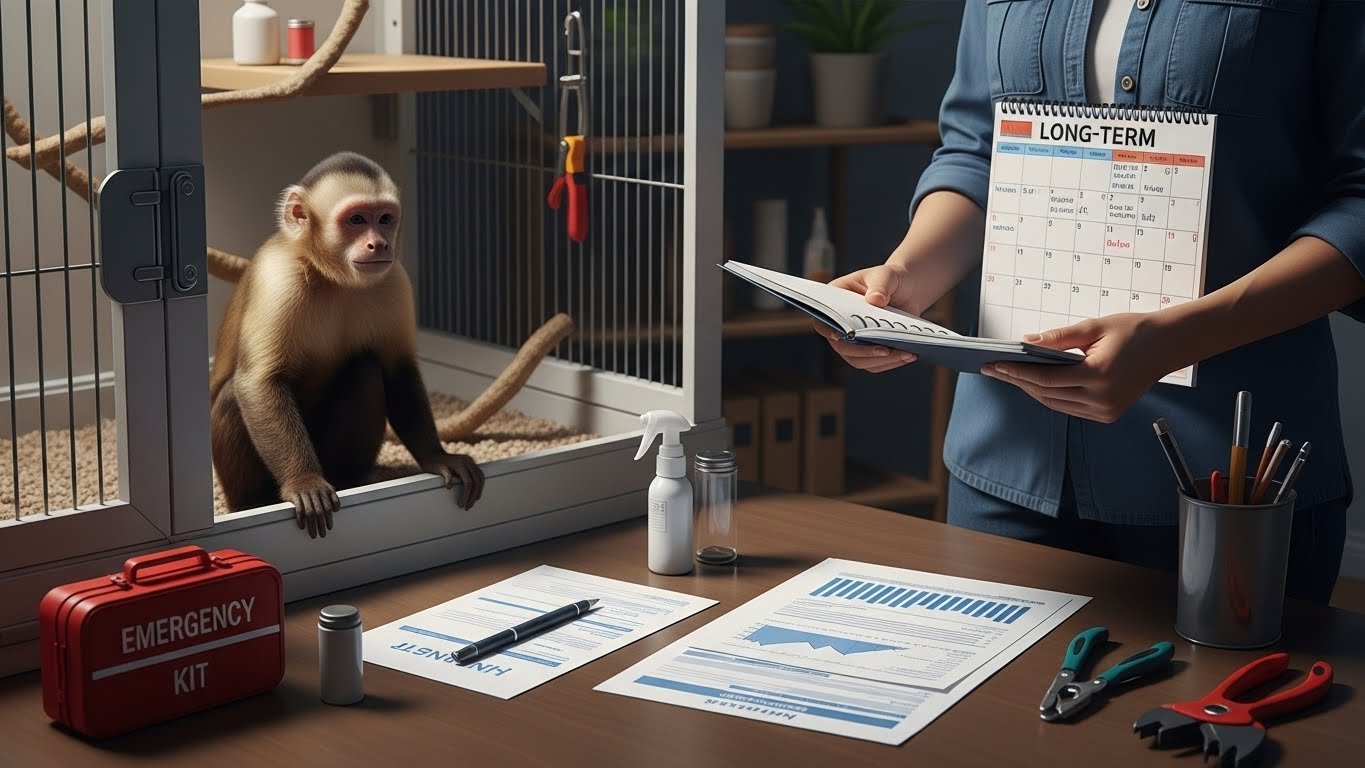

Keeping a capuchin monkey as a pet is one of the most demanding responsibilities a person can take on. Many beginners are attracted by their intelligence and expressive behavior, but capuchin monkey pet care for beginners requires deep understanding, long-term planning, and serious commitment.
Capuchin monkeys are not traditional pets. They are intelligent primates with emotional depth, social needs, and instincts shaped by the wild. This capuchin monkey care guide explains everything beginners must know before making such a life-changing decision.
Understanding Capuchin Monkeys as Pets
Capuchin monkeys are small New World primates known for advanced problem-solving skills. Despite being raised by humans, they are not domesticated animals.
For anyone researching can you keep a capuchin monkey as a pet, it is important to understand that their behavior is closer to a wild animal than a household pet.
Key characteristics of capuchin monkeys as pets
- Extremely intelligent and curious
- Emotionally sensitive
- Strong bonding with caregivers
- Can develop aggression with age
- Require constant mental stimulation
Owning a capuchin monkey is often compared to raising a human child for decades.
Capuchin Monkey Temperament and Personality
Understanding capuchin monkey behavior in captivity is essential for beginners. Their personality changes significantly as they mature.
Capuchin monkey temperament traits
- Playful and affectionate when young
- Can become territorial during adolescence
- Prone to jealousy and frustration
- Biting behavior increases with maturity
- Destructive if bored or stressed
Many first-time owners struggle because they underestimate how challenging adult capuchins can become.
Legal Considerations Before Owning a Capuchin Monkey
Before researching food or housing, beginners must confirm capuchin monkey ownership laws in their area. Laws vary widely by country, state, and even city.
Legal requirements for owning a capuchin monkey
- Exotic animal permits
- Government or wildlife approval
- Routine inspections
- Proof of experience (in some areas)
- Liability insurance or bonding
Failure to follow the law can result in confiscation of the monkey and legal penalties.
Housing and Living Environment for Capuchin Monkeys
Proper housing is one of the most important aspects of capuchin monkey care at home. A small cage is never enough.
Capuchin monkey enclosure requirements
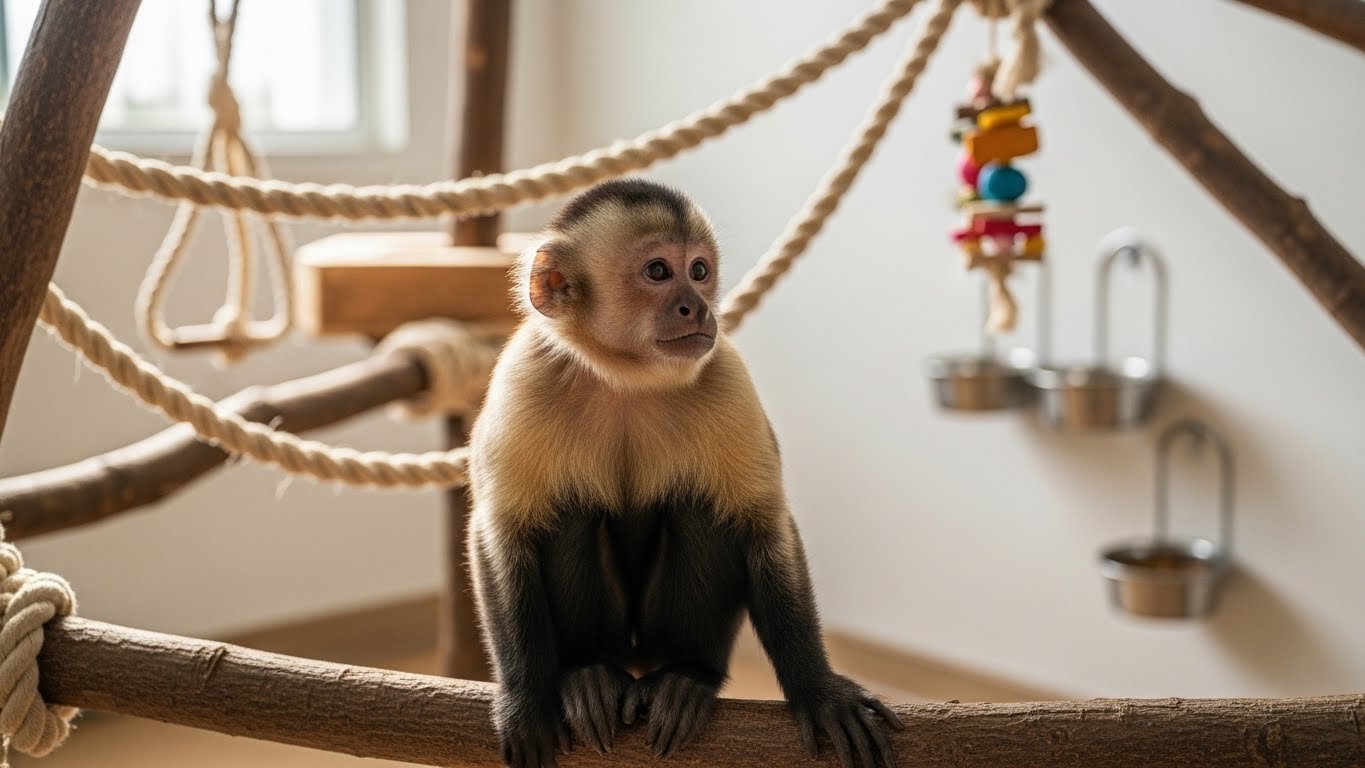
- Large vertical climbing space
- Heavy-duty escape-proof materials
- Indoor and outdoor access (climate permitting)
- Sheltered sleeping area
- Separate feeding and activity zones
Poor housing often leads to severe behavioral and health problems.
Environmental Enrichment for Capuchin Monkeys
Mental stimulation is critical for capuchin monkey mental health. Without enrichment, capuchins become aggressive or depressed.
Daily enrichment ideas
- Puzzle feeders and foraging toys
- Natural branches and ropes
- Rotating toys to prevent boredom
- Supervised free-movement time
- Training-based play sessions
Enrichment is not optional it is a daily requirement.
Capuchin Monkey Diet and Nutrition
One of the most searched topics is what do capuchin monkeys eat as pets. Their diet must closely resemble what they would eat in the wild.
Healthy capuchin monkey diet
- Fresh fruits in controlled portions
- Fiber-rich vegetables
- High-quality primate pellets
- Cooked lean protein occasionally
- Nuts and seeds as limited treats
Foods dangerous for capuchin monkeys
- Sugary snacks
- Chocolate and caffeine
- Fried or salty foods
- Dairy products
- Processed human food
Improper nutrition can cause obesity, diabetes, and vitamin deficiencies.
Health Care and Veterinary Needs
Capuchins require exotic animal veterinary care, which is expensive and not widely available.
Routine health care needs
- Annual physical exams
- Blood tests
- Parasite prevention
- Dental monitoring
- Vaccinations as advised
Common health problems in pet capuchins
- Obesity
- Stress-related illness
- Dental disease
- Metabolic disorders
- Zoonotic disease risks
Healthcare planning should be done before ownership, not after.
Training and Behavior Management
Effective capuchin monkey training for beginners requires patience and consistency. Punishment-based training causes fear and aggression.
Best training methods
- Positive reinforcement
- Clicker training
- Simple commands
- Early socialization
- Predictable daily routines
Managing aggression and biting
- Neutering may reduce aggression
- Avoid encouraging rough play
- Recognize stress signals early
- Seek professional behavior support
Social Needs and Emotional Well-Being
Capuchins are highly social animals. Leaving a capuchin monkey alone for long periods can cause severe emotional damage.
Emotional care requirements
- Daily interaction with caregivers
- Gentle handling
- Stable routine
- Respect personal boundaries
- Independent play opportunities
Isolation often leads to depression and self-harm behaviors.
Long-Term Commitment and Lifestyle Impact
One of the biggest concerns with capuchin monkey ownership for beginners is longevity. Capuchins can live over 40 years.
Lifetime costs of owning a capuchin monkey
- High purchase price
- Custom enclosures
- Specialized food
- Exotic veterinary care
- Permit and insurance fees
Lifestyle changes
- Limited travel
- Daily care routines
- Noise and mess management
- Home modifications
- Emergency planning
Important Facts About Capuchin Monkey Care
- Capuchins can remember negative experiences for years
- Adolescence is the most difficult stage
- Emotional stress directly affects physical health
- Many owners surrender monkeys later in life
- They are one of the most challenging exotic pets
FAQs Capuchin Monkey Pet Care Guide for Beginners
Is a capuchin monkey good for first-time exotic pet owners?
No. They require advanced care, experience, and resources.
How long does a capuchin monkey live?
Average lifespan is 35 to 45 years, sometimes longer.
Can capuchin monkeys be left alone during the day?
No. Long isolation causes stress and behavioral problems.
Are capuchin monkeys dangerous as pets?
They can become aggressive, especially with age.
What is the biggest mistake beginners make?
Underestimating long-term responsibility and emotional needs.
Conclusion
Capuchin monkey ownership is not about novelty or entertainment. It is a serious, lifelong responsibility that requires legal compliance, financial stability, emotional commitment, and constant care.
For beginners, learning and preparation are essential. These intelligent primates deserve informed, ethical treatment, and responsible ownership always begins with understanding the reality, not the attraction.